Implant-Supported Dentures vs. Traditional Dentures: Which Is Right for You?
Implant-supported dentures vs. traditional dentures in Encino: real costs, timelines & candidacy.
Implant-supported dentures anchor to two or more titanium implants placed in the jawbone, so they don’t slip and they help preserve bone; traditional dentures rest directly on the gums, cost less upfront, but typically need relining every couple of years as your jaw changes shape. Traditional dentures usually run $1,500–$5,000 upfront for a full set, while implant-supported options range from $6,000 for a basic removable overdenture to $30,000+ per arch for a fixed, non-removable version. Once you factor in a decade of relines and replacements, the total cost gap between the two options is often smaller than patients expect.
What’s the Real Difference Between the Two?
A traditional denture is a removable acrylic appliance held in place by suction, adhesive, and the shape of your gums — nothing is attached to the bone underneath. An implant-supported denture clips or screws onto implants that are surgically placed in the jawbone, so it doesn’t rely on suction to stay put. Because the implants transmit chewing pressure into the bone the way natural tooth roots do, they also slow the bone loss that causes traditional dentures to loosen and the lower face to look sunken over time.
How Much Does Each Option Cost — Now and Over 10 Years?
Over 10 years, traditional dentures run roughly $2,000–$6,000 per arch once you factor in the initial set, periodic relines, repairs, and an eventual replacement. Implant-supported dentures cost more upfront, typically $5,000–$15,000 per arch, but the implants are built to last, so you’re looking at fewer replacements over the same period. Your actual 10-year total depends on the number of implants, materials, insurance coverage, and whether you need additional procedures like bone grafting.
What Types of Implant-Supported Dentures Are There, and How Many Implants Do You Need?
There are two main designs, and they don’t need the same number of implants. A removable overdenture clips onto a bar or individual ball attachments and can pop out for cleaning at night — a lower arch typically needs just two implants, while an upper arch usually needs four for adequate support. A fixed hybrid denture (often marketed as All-on-4 or All-on-6) is screwed onto four to six implants per arch and only comes out in the dentist’s office, functioning much closer to natural teeth day to day. Patients are sometimes surprised to learn a two-implant lower overdenture exists at all, since marketing tends to focus on the pricier fixed version.
What Does Treatment Actually Look Like, Appointment by Appointment?
Expect four to six visits over roughly four to nine months. Visit one is a consultation with a 3D scan to map bone volume and plan implant positions. Visit two is the surgical appointment, placing two to six implants (plus any extractions) in one to two hours under local anesthesia; you’ll wear a temporary denture immediately afterward. Then comes a healing period of three to six months for the bone to fuse to the implants. The final visits attach the bar or abutments and fit the finished denture.
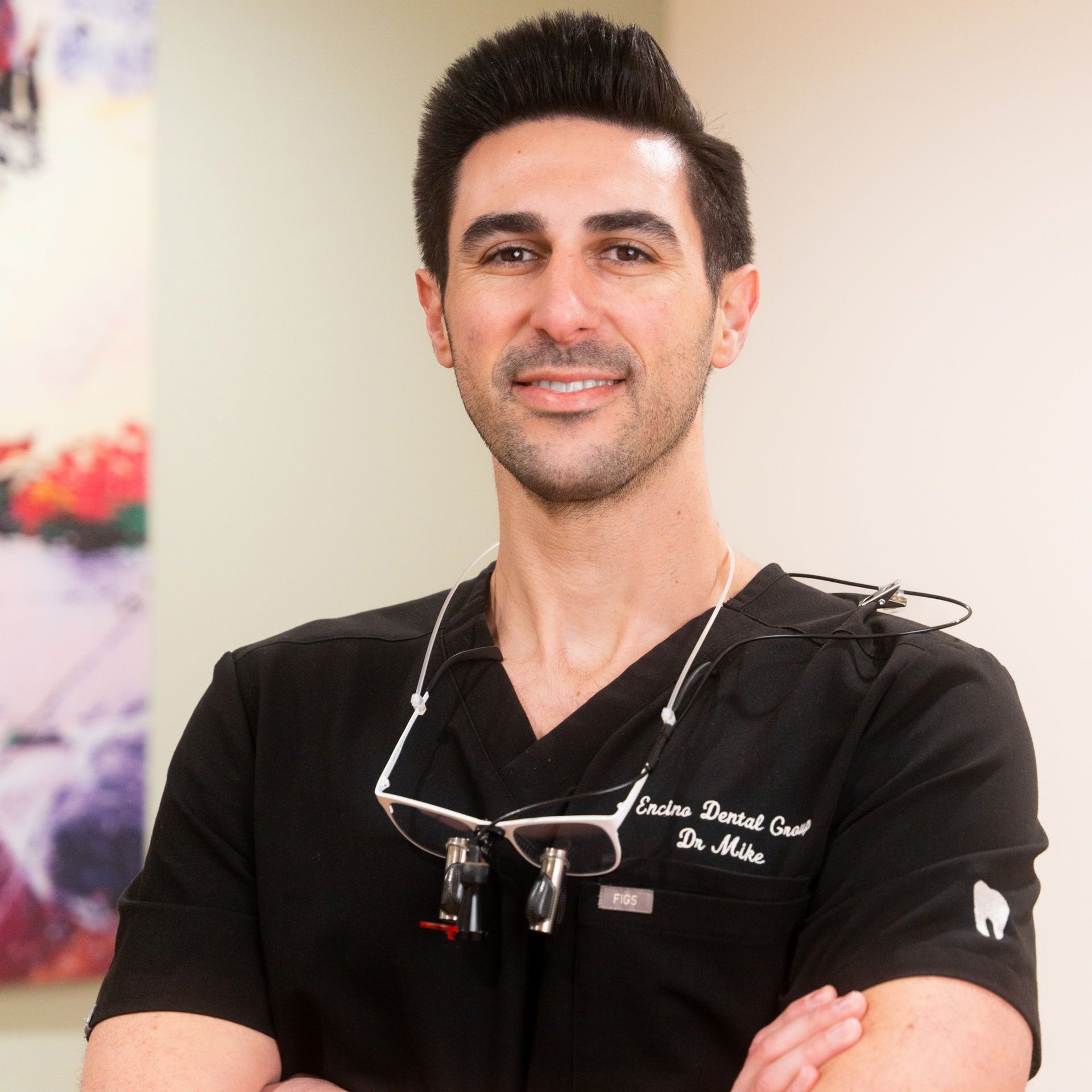
“Patients often assume implant-supported automatically means the expensive fixed version,” says Dr. Mike Mamaliger, AACD, AGD, CDA, of Encino Dental Group. “But a lower denture stabilized on just two implants solves the slipping problem for a fraction of the cost of a full fixed arch. I’d rather see someone get a stable, affordable overdenture than skip implants entirely because they assume it’s all-or-nothing.” Patients considering dental implant treatment in Encino can discuss both designs at a single consultation.
Who’s a Good Candidate for Each Option?
Implant-supported dentures require enough jawbone density to anchor the implants; your dentist may recommend a bone graft first if you’ve been missing teeth for years, which adds time and cost. Traditional dentures remain the better fit for patients who can’t have oral surgery for medical reasons, need a faster or lower-cost solution, or simply prefer a fully removable option. Bone loss doesn’t automatically disqualify someone from implants — it usually just means an added grafting step, which your dentist can evaluate at a consultation.
Which Wins for Comfort, Eating, and Daily Life?
Implant-supported dentures generally win on stability, chewing force, and speech clarity, since they don’t shift the way a gum-supported denture can. Traditional dentures still hold real advantages: they’re non-surgical, faster to get, easier to adjust chairside, and simpler to clean since you remove the whole appliance. Neither option is “wrong” — it comes down to whether the trade-off of surgery and a longer timeline is worth the added stability for your lifestyle and budget.
FAQs
Q.1 Can I switch from traditional dentures to implant-supported dentures later?
A: In most cases, yes. If your jawbone still has adequate volume, implants can often be placed under an existing denture design, or a new implant-supported appliance can be built. A dentist will need to evaluate bone density and gum health first to confirm you’re still a good candidate.
Q.2 Do implant-supported dentures still need to be removed for cleaning?
A: It depends on the type. Removable implant-supported dentures can be taken out for daily cleaning, allowing you to thoroughly clean the denture and your gums. Fixed hybrid dentures, on the other hand, stay securely in place and are cleaned in the mouth with a toothbrush and floss threader, similar to natural teeth. Your dentist can recommend the best cleaning routine based on the type of restoration you have.
Q.3 How many implants does a full-arch denture actually require?
A: A removable lower overdenture typically needs as few as two implants, while an upper overdenture usually needs four. Fixed, non-removable full-arch dentures generally use four to six implants per arch, depending on bone quality and the design your dentist recommends.
Ready for an exact number?
Call Encino Dental Group at (818) 438-3838 or schedule a consultation online with Dr. Mike Mamaliger for a written, itemized implant quote.